The Secret Life of Dogs
Over the years, I've come to think of training less as teaching and more as organized learning.

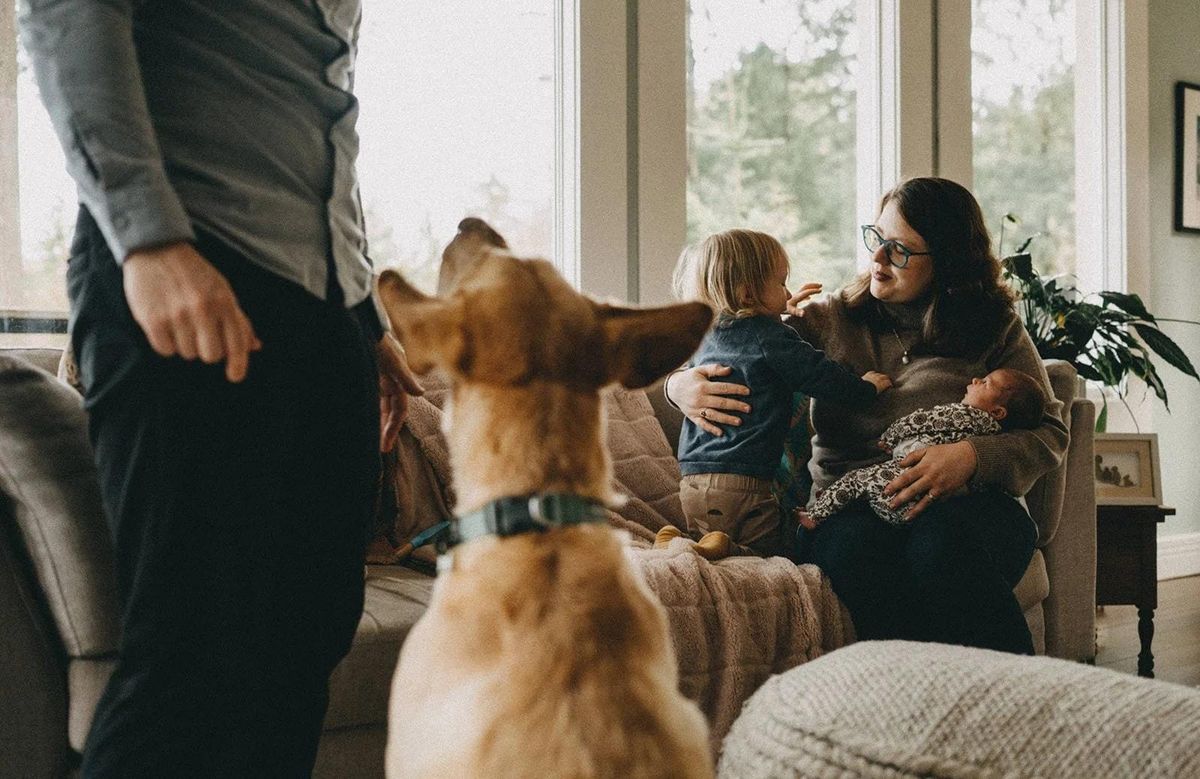
One of my favorite moments during an initial consultation usually comes after we've talked through the dog's history, the family's concerns, and what they're hoping life with their dog might eventually look like. Somewhere along the way, someone will often say, "We really haven't started training yet."
I know exactly what they mean. Life gets busy. Maybe they adopted an adult dog and have been focused on helping everyone settle in. Maybe they have a young puppy and have been waiting until puppy class begins. Sometimes they've watched a few videos or taught a couple of basic cues, but they don't feel like they've really begun the work of training.
It's a completely understandable way to think about it because most of us picture training as something we schedule. We imagine setting aside fifteen or twenty minutes, filling a treat pouch, and working on "sit," "come," or loose-leash walking. Training feels like something we decide to begin.
The funny thing is that, by the time we're having that conversation, the dog has already been learning for its entire life. Every experience they've ever had has taught them something about how the world works. They've learned which sounds predict dinner, which family member is most likely to throw the tennis ball one more time, what happens when they bark at the front window, and whether jumping on the counter is occasionally rewarded with a forgotten sandwich. None of those lessons were part of a formal training plan, but they were lessons all the same.
The longer I work with dogs, the more I find myself paying attention to everything that happens outside of formal training sessions. Spend an afternoon simply watching a dog in a new home and it's remarkable how much information they're collecting. They notice who gets up first in the morning, where food is prepared, which door leads outside, who shares the couch, and which pair of shoes usually means someone is leaving. They begin recognizing routines long before we realize there are routines to recognize, and once they begin recognizing those patterns, they start making predictions about what happens next.
Years ago, my band moved to East Montréal, into the part of the city where French wasn't just common, it was simply the language of everyday life. I spoke almost none of it. Going to the grocery store became an exercise in observation. Ordering food meant watching what everyone else did first. I paid attention to facial expressions, gestures, routines, and the reactions people had to one another because those things often carried more useful information than the words themselves. Little by little, patterns began to emerge. I didn't stop paying attention when I walked out of a French class because there wasn't one. Paying attention was the class.
I've thought about that experience many times while watching dogs settle into a new home. Dogs don't arrive understanding why we disappear into another room to cook dinner, why one door leads outside while another opens into the garage, or why putting on one pair of shoes means we're leaving for five minutes while another means we'll be gone all day. They don't understand why children behave differently than adults, why visitors sometimes stay for hours and other times leave after only a few minutes, or why the sound of the vacuum cleaner deserves everyone's attention. Like any of us trying to find our footing in an unfamiliar place, they begin by watching.
It isn't long before watching turns into experimenting, although most of those experiments are so ordinary that we barely notice them. A puppy discovers that sitting near the pantry sometimes causes someone to walk over and open it. A dog waiting by the back door learns that making eye contact is more effective than scratching. Another dog discovers that dropping a tennis ball in someone's lap is much more successful than leaving it across the room. Little by little, dogs begin sorting through the countless possibilities available to them, keeping the ones that seem to work and gradually abandoning the ones that don't.
One of the things I enjoy most about behavior work is that it encourages me to become curious about those experiments. By the time someone calls me because their dog is barking at visitors, pulling on leash, or ignoring recall, the dog has already accumulated an enormous amount of experience living in that environment. Rather than wondering why the dog is making those choices, I usually find myself wondering what those choices have been accomplishing from the dog's point of view. Somewhere along the way, those behaviors began making sense.
That's one of the reasons I don't spend much time thinking about training as something that happens only during formal sessions. The kitchen teaches. The backyard teaches. Walks teach. Other dogs teach. Squirrels teach. The neighborhood teaches. Every interaction gives dogs another opportunity to refine their understanding of how their behavior influences the world around them.
A dog that pulls toward another dog may eventually arrive where they wanted to go. A dog that counter surfs doesn't need to find food every time they jump onto the counter. Every now and then is enough to keep checking. A dog that barks when the mail carrier walks past the front window experiences something that, from the dog's perspective, looks remarkably consistent: the barking is followed by the mail carrier leaving. None of those lessons were intentionally taught, but they become part of the dog's education just the same.
One of the ideas that drew me toward behavior analysis years ago is that it asks us to look at learning before it asks us to look at obedience. Rather than beginning with questions like, "How do I stop this behavior?" it encourages us to ask, "What has the dog been learning?" Those are often very different questions, and they tend to lead us toward very different solutions.
Over the years, I've come to think of training less as teaching and more as organizing learning. A training session gives us an opportunity to arrange the environment, make the right choice easier, reinforce it clearly, and repeat it often enough that it begins competing successfully with all the other lessons the dog encounters during the week. That's one of the reasons five thoughtful minutes can be extraordinarily valuable, but it's also why those five minutes can never carry the entire weight of a dog's education. The other one hundred and sixty-seven hours matter just as much.
Once I began looking at training that way, management started making a lot more sense to me too. A baby gate isn't simply a way of preventing a mistake. A long line isn't merely a safety tool. Rearranging the kitchen so a curious adolescent dog can't rehearse counter surfing isn't avoiding training. Those choices change what the dog has an opportunity to practice while new habits are taking shape. Every time we prevent one behavior from being rehearsed and create an opportunity for another, we're changing the lessons the environment has available to teach.
The same thing is true of enrichment, although I don't think I fully appreciated that until much later in my career. We often think of enrichment as something nice to give our dogs when we have extra time, but many forms of enrichment are really opportunities to practice being a dog. Following an interesting scent, searching for hidden food, solving a puzzle, carrying a backpack on a hike, learning to wait before chasing a flirt pole, navigating an agility course, or figuring out how to earn one more game of tug all ask dogs to make decisions, solve problems, exercise self-control, and engage with the world in ways that have mattered to dogs for thousands of years.
By the time a formal training session begins, all of that learning is already in motion. The session doesn't replace it. It joins it. That's why I've become increasingly interested in the quiet moments that happen between the obvious ones. A dog choosing to settle on a mat instead of following someone into the kitchen. A dog noticing another dog across the street and deciding to keep walking. A dog glancing back during a hike simply to check where everyone is. Those choices rarely feel dramatic when they happen, but they are often the moments that become the foundation for everything else.
When I think back to those conversations at the beginning of an initial consultation, I still smile when someone tells me they haven't really started training yet. I know exactly what they mean, and in one sense they're right. We haven't started working together yet. At the same time, their dog has already been studying that household every day, conducting thousands of tiny experiments, and gradually building an understanding of how life with this particular family works. Formal training gives us the chance to become thoughtful participants in that process, but the learning itself has been underway since the day the dog was born. I suspect that's one of the reasons dogs continue to fascinate me after all these years. Long before we begin trying to teach them, they've already been doing their best to understand us.